Construction
Construction workforce: independent reporting for contractors, HR leaders and workforce developers
Reporting on the construction labor force: who does the work, where workers come from, and how immigration and retirement change the supply.
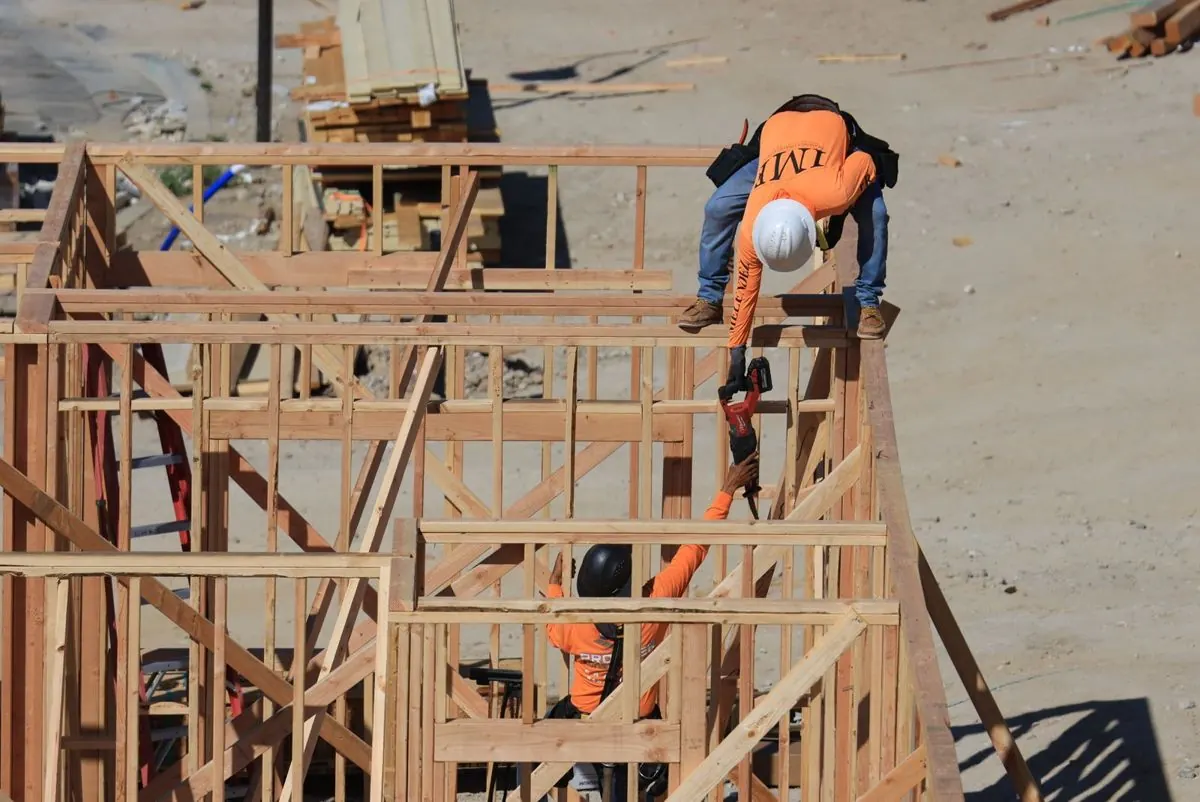
Construction workforce, defined
The construction workforce is everyone employed to build and maintain structures, from laborers and craft workers to supervisors. Its size and makeup are measured mainly by federal payroll data and the Census Bureau's American Community Survey.
What Field Letter Press covers for contractors, HR leaders and workforce developers
Field Letter Press reports on labor supply as a cost and schedule question: which trades depend on immigrant workers, how hard supervisors are to hire, and what the federal data can and cannot show.
Case in point
More than half of drywall installers were born abroad, and net migration halved in 2025
Immigrants were a record 26.3 percent of the construction workforce in 2024, concentrated in the trades that finish buildings.
Read transcript
More than half of drywall installers were born abroad, and net migration halved in 2025
Immigrants were a record 26.3 percent of the construction workforce in 2024, concentrated in the trades that finish buildings.
Immigrants made up 26.3 percent of the U.S. construction workforce in 2024, a record, according to the National Association of Home Builders' analysis of the Census Bureau's American Community Survey. Among craft workers the share is about one in three. In several trades it is a majority: 57 percent of drywall and ceiling tile installers, 56 percent of plasterers and stucco masons, 53 percent of roofers and of painters, and 51 percent of carpet, floor and tile installers. Construction laborers are 43 percent foreign-born and carpenters 35 percent.
The dependence is uneven by place and by type of work. Immigrants are 42 percent of construction workers in California, 41 percent in Florida and 39 percent in Texas. Ken Simonson, chief economist of the Associated General Contractors of America, has noted that the trades with the highest immigrant shares are the ones used most in homebuilding, while trades used heavily on nonresidential sites, such as equipment operators, rely less on foreign-born workers.
The 2024 figures describe a workforce built during a period of high immigration. The Census Bureau estimates that net international migration fell from 2.7 million in the year ending June 30, 2024 to 1.3 million in the following year, and projects about 321,000 for the year to July 2026 if current trends continue. The trade-level surveys run more than a year behind, so the effect on finishing crews will appear in later releases. For a general contractor that buys drywall, roofing and painting through subcontractors, the exposure sits a tier down the contract, where it is easiest to miss.
The full piece, with numbered sources, is at fieldletterpress.com.
Immigrants made up 26.3 percent of the U.S. construction workforce in 2024, a record, according to the National Association of Home Builders' analysis of the Census Bureau's American Community Survey. Among craft workers the share is about one in three. In several trades it is a majority: 57 percent of drywall and ceiling tile installers, 56 percent of plasterers and stucco masons, 53 percent of roofers and of painters, and 51 percent of carpet, floor and tile installers. Construction laborers are 43 percent foreign-born and carpenters 35 percent.
The dependence is uneven by place and by type of work. Immigrants are 42 percent of construction workers in California, 41 percent in Florida and 39 percent in Texas. Ken Simonson, chief economist of the Associated General Contractors of America, has noted that the trades with the highest immigrant shares are the ones used most in homebuilding, while trades used heavily on nonresidential sites, such as equipment operators, rely less on foreign-born workers.
The 2024 figures describe a workforce built during a period of high immigration. The Census Bureau estimates that net international migration fell from 2.7 million in the year ending June 30, 2024 to 1.3 million in the following year, and projects about 321,000 for the year to July 2026 if current trends continue. The trade-level surveys run more than a year behind, so the effect on finishing crews will appear in later releases. For a general contractor that buys drywall, roofing and painting through subcontractors, the exposure sits a tier down the contract, where it is easiest to miss.
Where construction depends most on immigrant workers
Foreign-born share of workers by trade, 2024, percent
Sources
- NAHB Eye on Housing: which states and construction trades depend the most on immigrant workers (Apr. 6, 2026)
- Construction Dive: immigration and the construction trades (Apr. 17, 2026)
- U.S. Census Bureau: population growth slows due to historic decline in net international migration (Jan. 27, 2026)
Checked against the sources listed, November 14, 2026. Figures and rules that change over time are re-checked when this page is updated.
Reporting on construction workforce
- AnalysisSuperintendents Are Hard to Hire. The Schedule Effect Is Unmeasured.
Three in four contractors hiring superintendents say the job is hard to fill. No survey read for this article measures what that does to bidding or to schedules.
- AnalysisPrefab’s Hard Parts Include the Loading Dock
Federal rules cap vehicle width at 102 inches and leave wider loads to state permits. Shipping, the haul route and fit-up at the site decide whether factory savings survive delivery.
- AnalysisWhat an Estimator Does When Takeoff Is Automatic
Estimating software now counts symbols and measures areas from drawings on its own. The one independent test read for this piece found the counts more reliable than the areas, and no vendor claims to find scope the drawings omit.
Questions about construction workforce
Where do construction workforce statistics come from?
Job counts come mainly from the Bureau of Labor Statistics payroll survey. Facts about the workers themselves, including age and where they were born, come mainly from the Census Bureau's American Community Survey.
What is a registered apprenticeship?
A registered apprenticeship is a training program approved by the Department of Labor or a state agency that combines paid on-the-job learning with classroom instruction and ends in a recognized credential.
What has Field Letter Press published on construction workforce?
Recent pieces include “Superintendents Are Hard to Hire. The Schedule Effect Is Unmeasured.”, “Prefab’s Hard Parts Include the Loading Dock” and “What an Estimator Does When Takeoff Is Automatic”.
Related fields
Page updated November 14, 2026.