Office-to-Residential, Floor Plate by Floor Plate
About 90,300 apartments are in the U.S. office-conversion pipeline. Floor-plate depth, core position and windows screen out most candidate buildings before price is considered.
In brief
RentCafe counts 90,300 apartments in the U.S. office-conversion pipeline at the start of 2026. Floor-plate depth, core position and operable windows screen out most candidate buildings before price is considered.
Read transcript
Voice 2: Office to residential, floor plate by floor plate. From the real estate desk, the argument that geometry decides before price does.
Voice 1: The pipeline numbers first. One report counts 90,300 apartments in the U.S. office conversion pipeline at the start of 2026. That is up 28% in a year.
Voice 2: And a brokerage counted 81 million square feet of planned and underway conversions, as of May 2025. Which sounds huge.
Voice 1: Until you divide. It is 1.9% of U.S. office inventory.
Voice 2: So, large in units, small against the stock. Why?
Voice 1: The floor plate. Apartments need windows. A deep office floor leaves a lot of space too far from daylight.
Voice 2: An economics working paper put numbers on it. It applied a limit of 60 feet from window to core, along with other physical tests, to office buildings in dense commercial districts of the largest U.S. cities.
Voice 1: About 15% of buildings passed the physical screens. And 11% after adding lease and emissions filters. That is 2,644 buildings out of nearly 24,000.
Voice 2: So the advice is, screen the floor plate first. An architect or structural engineer can run those tests before the owner pays for a financial model.
Voice 1: There is a warning about the headline counts. They are not comparable.
Voice 2: One reports units, and includes projects that are only planned or prospective. Another reports square feet. And a design firm's 25% figure describes only buildings that firm scored.
Voice 1: And a project counted as planned has not necessarily cleared the depth and window tests.
Voice 2: The pipeline also seems to grow faster than deliveries. The brokerage expected about 68 completed conversions in 2025, below the record 94 the year before, while the planned total kept rising.
Voice 1: Then the incentives. New York's tax benefit rewards early starts, and its term already stepped down once, in July 2026.
Voice 2: If the shallow buildings with operable windows moved first, later entrants hold deeper plates and shorter tax breaks at the same time.
Voice 1: And no source reports a national completion rate for announced conversions.
Voice 2: The full piece, with sources, is at fieldletterpress.com.
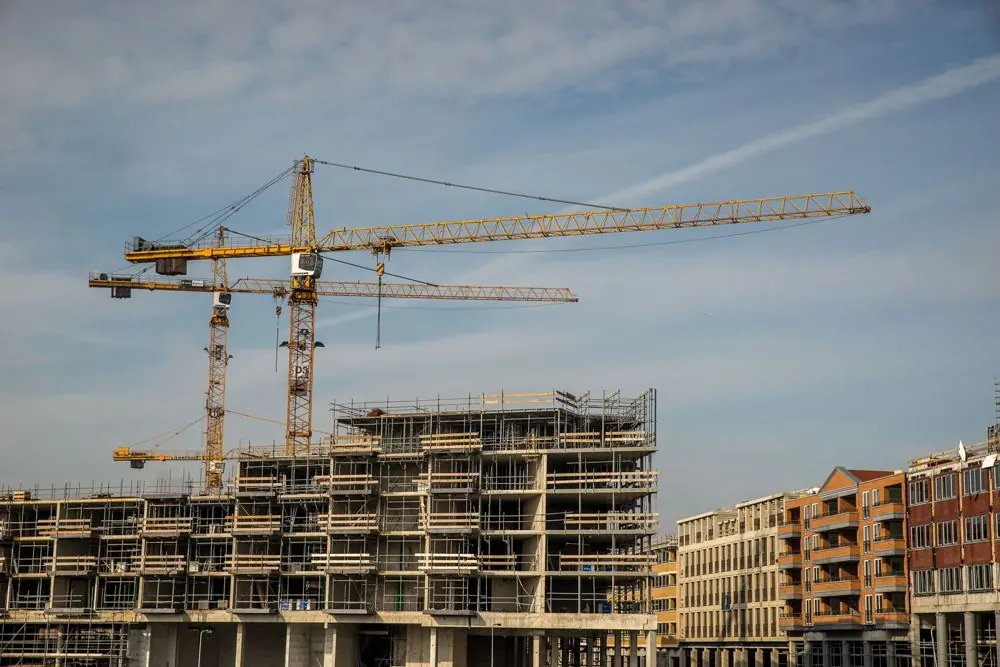
The pipeline of offices being turned into apartments is large in units and small against the stock. RentCafe's 2026 report, built on Yardi Matrix data, counts 90,300 apartments in the U.S. office-conversion pipeline at the start of 2026, up 28% in a year, in projects of 50 or more units that are under conversion, planned or prospective10. CBRE counted 81 million sq. ft. of planned and underway conversions in 44 markets as of May 2025, or 1.9% of U.S. office inventory1.
Building geometry explains much of the gap, and it can be checked early. An architect or structural engineer can run the physical screens before an owner pays for a pro forma. An NBER working paper that applied a 60-foot window-to-core limit and other physical tests passed about 15% of office buildings in dense U.S. commercial districts, and 11% after lease and emissions filters3.

Read the graphic as text
212 Fifth Avenue, built 1913: plate about 165 by 56 feet, operable windows, wall-to-window ratio about 40%. 180 Water Street, built 1971: plate about 172 by 108 feet, no operable office windows, wall-to-glazing ratio about 75%. Drawn as rectangles at one scale with a 50-foot scale bar.
The most explicit published screen is in NBER Working Paper 31530 (August 2023) by Arpit Gupta, Candy Martinez and Stijn Van Nieuwerburgh. Section 2.1 keeps a building if it was built before 1990, is Class A-minus or lower, has at least 25,000 sq. ft., and measures 60 feet or less from window to core, computed for New York as the smaller of half the width or half the depth, and nationally from average floor size3. Across the 105 largest U.S. cities the final sample is 2,644 of 23,903 office properties, 214 million sq. ft. At 875 sq. ft. per unit and a 30% loss factor the authors get 171,470 apartments, or about 400,000 once scaled for gaps in data coverage3.
Design practice describes the same variables with less arithmetic. New York City's Office Adaptive Reuse Study (January 2023, architectural findings, p. 21) says shallow plates convert most easily, that early twentieth-century buildings with individual operable windows are the easiest stock, and that post-1960s curtain-wall buildings cost more because residential use requires operable windows. It also lists core location, ceiling height, and existing energy and acoustic performance4. The study cites 180 Water Street, where an internal courtyard was cut into a large plate4. The task force's September 2022 working slides give the numbers behind that contrast: 212 Fifth Avenue, built in 1913, has a plate of about 165 by 56 feet with operable windows, while 180 Water Street, built in 1971, runs about 172 by 108 feet with no operable windows and roughly 75% glazing . Gensler says it has assessed more than 1,300 candidate buildings and that about 25% of those scored were suitable; the firm puts conversion at roughly 30% below new construction cost, which is its own claim9.
Light and air, by statute
In New York, the light-and-air test is statutory. Multiple Dwelling Law section 277, subdivision 7(b), requires each dwelling unit to have a window on a street, on a court measuring at least 15 feet perpendicular to the window, or on a 30-foot rear yard, with further alternatives for rear-yard windows. Living-room window area must equal 10% of floor area for rooms under 500 sq. ft., and at least half of it must open5. The city's study notes that conversions under its flexible rules use the section 277 standards4. City of Yes for Housing Opportunity (December 2024) extended conversion eligibility to buildings built before 1991, from cutoffs of 1961 in most areas and 1977 in the Financial District and a few other areas6.
Incentives with a calendar
Incentives are layered on top of those physical limits. New York's 467-m exemption requires 25% income-restricted units and gives a 90% exemption in the Manhattan Prime Development Area for 30 years if construction started by June 2026, 25 years for starts through June 2028 and 20 years through June 2031. The Comptroller counted 44 buildings and about 17,400 units, completed, ongoing or potential, as of the first quarter of 20256. Washington's Housing in Downtown program offers a 20-year abatement under annual caps: $5 million for fiscal 2027 and $41 million for fiscal 2028, with $22.9 million of the 2028 cap remaining7. Calgary pays $75 per sq. ft. and lists 21 projects covering 2.68 million sq. ft. and 2,667 homes. Its latest intake ran from mid-June to 27 July 2026 and is closed8.
| Construction starts by | Exemption term |
|---|---|
| June 2026 | 30 years |
| June 2028 | 25 years |
| June 2031 | 20 years |
Terms for the 90% exemption in the Manhattan Prime Development Area, which requires 25% income-restricted units, as described by the New York City Comptroller. Source: Office of the New York City Comptroller.
The incentive calendars reward early starts, and the 467-m term stepped down on 1 July 20266. If the shallow, operable-window buildings were the first to move, as the city's own findings on ease of conversion imply, later entrants hold deeper plates and shorter abatements at once46. No source read for this piece reports a national completion rate for announced conversions, and CBRE's count is 18 months old.
Counts that do not compare
The headline counts are not comparable with one another. RentCafe reports units, and neither the report nor its republication splits the national total by construction stage102. CBRE reports square feet, with just over 70% of planned and active conversion space headed to multifamily1. Gensler's 25% describes buildings the firm scored, while the NBER 11% describes every office property in its dense-district sample, so the two rates measure different populations39.
CBRE's own series suggests the pipeline grows faster than deliveries. It expected about 68 conversions totaling 12.8 million sq. ft. in 2025, below the record 94 projects and 13.1 million sq. ft. of 2024, while the planned-and-underway total rose from 71 million to 81 million sq. ft. in six months1. A project counted as planned has not necessarily cleared the depth and window tests. The paper's 60-foot screen and section 277 are examples of what it still faces35.
The calendars are specific. In New York, construction must start by 30 June 2028 to receive the 25-year 467-m term, after which the term drops to 20 years6. Calgary's Incentives Approval Committee is projected to decide on the June to July 2026 intake by the end of the fourth quarter of 2026. In Washington, awards will be made against a $41 million fiscal 2028 abatement cap, of which $22.9 million remained.
Know someone who should read this?
Send it to your development or finance partner. Practical pieces like this one travel fastest from one practitioner to another.
Get the next one in your inbox
The Brief on Tuesdays and Field Note on Fridays, with Real Estate stories first. About five minutes each.
Read a sample issue before you sign up. One click to unsubscribe. Privacy notice. Edited by a team with more than 90 years combined in AEC business development, civil engineering and construction surety.
Updated November 15, 2026. This piece is now credited to the Real Estate Desk rather than a named desk byline, a short summary was added at the top, and the publication date was corrected to November 14, 2026, the day it first appeared on this site. Floor-plate dimensions from the New York City task force's September 2022 slides were added. Standards and corrections.
Sources
- Conversions and Demolitions Reducing U.S. Office SupplyCBRE · June 3, 2025 · primary source
- Office conversions pipeline hits 90,300 units nationwide for 2026, up 28% in just one year, finds RentCafe.comFMLink · March 27, 2026 · secondary source
- Converting Brown Offices to Green Apartments (Working Paper 31530)National Bureau of Economic Research · August 2023 · primary source
- New York City Office Adaptive Reuse StudyNYC Department of City Planning · January 2023 · primary source · read in part
- New York Multiple Dwelling Law, Section 277New York State Senate · date not shown · primary source
- Office-to-Residential Conversions in NYC: Economics and Fiscal EstimatesOffice of the New York City Comptroller · July 17, 2025 · primary source · read in part
- Housing in Downtown ProgramDC Office of the Deputy Mayor for Planning and Economic Development · date not shown · primary source
- Downtown Office Conversion Program; Downtown Development Incentive ProgramsCity of Calgary · November 4, 2026 · primary source
- What We've Learned by Assessing More Than 1,300 Potential Office-to-Residential ConversionsGensler · October 23, 2023 · primary source
- Office-to-apartment conversions break records again, with 90K rentals in the pipelineRentCafe · March 24, 2026 · primary source
Credited to the Field Letter Press Real Estate Desk, a desk credit rather than a named reporter. This piece was researched and drafted with AI assistance, and each claim was checked against the sources listed above by a separate reviewer. Field Letter Press did not interview anyone for it. How we work · Report an error