Mass Timber Meets the Insurance Market
Tall mass timber is in the building code of 38 states. Insurers classify it by their own methods, and many carriers will take only a third of a project's coverage or less.
In brief
Tall mass timber is in the building code of 38 states, but insurance remains a major barrier: many carriers write a third of the coverage or less. Insurers' loss data cannot be compared across companies, so the project's fire, hot work and moisture plan becomes part of underwriting.
Read transcript
Voice 1: Mass timber meets the insurance market. From the business and risk desk. The line under the headline is, a material is only as buildable as it is insurable.
Voice 2: The building side is healthy. An industry group counted 2,833 mass timber projects in progress or built in the United States, as of June 2026.
Voice 1: And tall mass timber is in the building code of 38 states.
Voice 2: But a permit does not come with an insurance program. A 2025 roadmap prepared for that same group reports that developers and contractors still name the cost and availability of insurance as a major barrier.
Voice 1: How does that show up on a project?
Voice 2: Capacity. The roadmap reports that many carriers offer a third of the coverage or less. So one project may need three or four insurers on a single policy.
Voice 1: And pricing. Builder's risk rates of 15 to 75 cents per hundred dollars of insured value per year, attributed to a broker.
Voice 2: Here is the heart of it. The fire tests behind the code answered a life-safety question. Underwriters are asking what the repair costs.
Voice 1: After a fire, or after water damage. One insurer says most existing research does not establish the full cost of restoring a building.
Voice 2: And the loss data that would answer it sit inside each company and cannot be compared. Each carrier classifies the risk by its own method.
Voice 1: There is a new industry construction class for mass timber. But it is a class without a loss history. On-site data collection is only starting.
Voice 2: A fair note on sources. Most of the U.S. guidance comes from a wood industry body. Though its own roadmap says loss data are scarce and scattered.
Voice 1: So what does a project team do?
Voice 2: Treat the fire, hot work and moisture plan as part of the underwriting submission. It is not only a site safety document.
Voice 1: And there is an open question. The 2024 code allows fully exposed timber ceilings in one construction type. None of the documents says whether underwriters rate that differently.
Voice 2: The full piece, with sources, is at fieldletterpress.com.
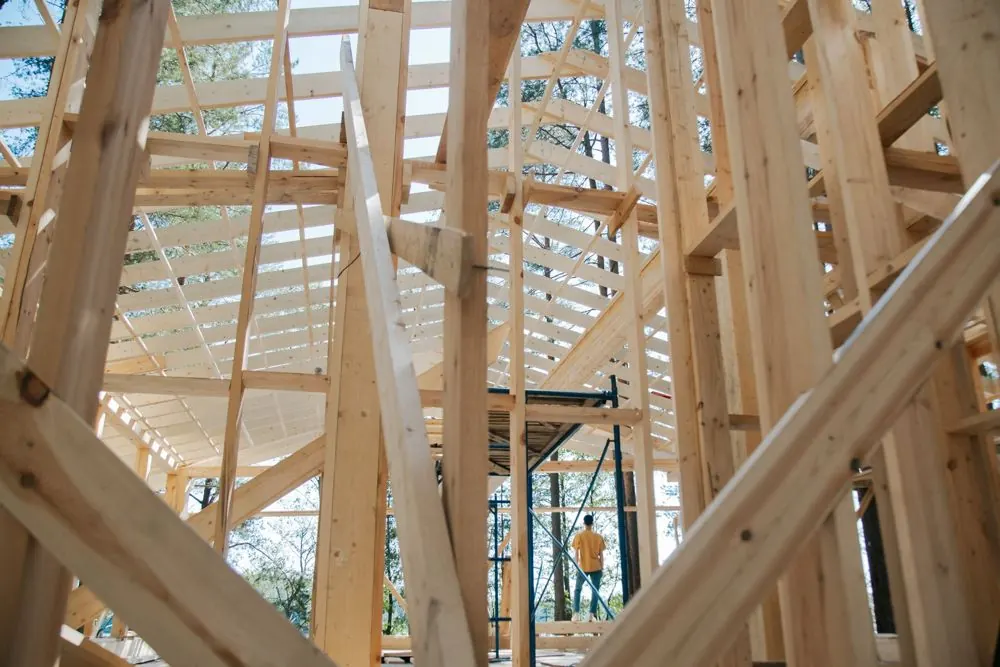
Mass timber has moved well past the experimental stage in the United States. WoodWorks, a wood industry body, counted 2,833 multi-family, commercial or institutional mass timber projects in progress or built as of June 20267. A roadmap prepared for the same organization in February 2025 nonetheless reports that developers and contractors still name the cost and availability of builder's risk and permanent property insurance as a major barrier2.
A permit for a tall timber building does not come with an insurance program. The roadmap reports that many carriers offer a third of the coverage or less, so that a project may need three or four insurers on one policy2. Tall mass timber is now in the building code of 38 states, but insurers' loss data sit inside each company and cannot be compared, and each carrier classifies the risk by its own method23. For a project team, that makes the plan for fire, hot work and moisture during construction part of the underwriting submission.
The 2021 International Building Code added three construction types for mass timber: Type IV-A, to 18 stories and 270 feet; Type IV-B, to 12 stories and 180 feet; and Type IV-C, to 9 stories and 85 feet, according to WoodWorks' 2021 technical paper on insurance1. The fire evidence was a series of five compartment tests run in 2017 at the ATF Fire Research Laboratory, in a program designed by the ICC Ad Hoc Committee on Tall Wood Buildings1. The 2024 IBC then raised the exposed mass timber ceiling allowance in Type IV-B from 20% to 100%, a change ICC's own summary ties to fire research at the Research Institutes of Sweden34. As of April 2026 WoodWorks lists 38 states that have adopted the tall mass timber provisions: 28 from the 2021 edition and 10 from the 2024 edition, some with amendments3.
| Type | Maximum stories | Maximum height |
|---|---|---|
| IV-A | 18 | 270 feet |
| IV-B | 12 | 180 feet |
| IV-C | 9 | 85 feet |
International Building Code, 2021 edition, as summarized in WoodWorks' 2021 technical paper on insurance. Insurers do not rate by these types. Source: WoodWorks - Wood Products Council.
How insurers classify it
Insurers do not rate by IBC type. ISO, the insurance industry's rating organization, uses six construction classes, and the WoodWorks paper says mass timber was often placed in Frame, the class written for stud and joist buildings, with premiums at or near light wood-frame rates1. The 2025 roadmap reports that insurers now broadly place the risk between light frame and noncombustible, but each by its own method: AXA XL created an intermediate class, Zurich uses an internal definition, FM Global uses its Data Sheet 1-36, and The Hartford was waiting for an ISO code2. A Verisk partner article in Carrier Management said in September 2024 that the 2025 revision of Verisk's SCOPES rating schedule introduces a mass timber class, CC-M, covering all three 2021 IBC types and positioned between noncombustible (CC-3) and joisted masonry (CC-2)6.
CC-M is a class without a loss history. The Verisk partner article says its fire weighting factors come from an engineering analysis and that on-site data collection starts with the revision6. Until that record builds, the carrier-by-carrier definitions described in the roadmap will persist, and they diverge on a point designers control: some insurers accept light framing up to about 10% of structural value in a hybrid building, and others rate any light framing as light frame2.
On price, the roadmap cites the broker Gallagher for builder's risk rates of $0.15 to $0.75 per $100 of insured value per year on mass timber, with the spread driven by project size, the share of the structure that is timber, location, fire protection and carrier appetite2. It reports rates trending down as capacity grows, and says parity with concrete or steel still looks distant2. On capacity, the roadmap reports Zurich offering up to $50 million for qualifying risks, and AXA XL's own December 2025 article says large mass timber projects often need several insurers because no single carrier takes the whole limit25.
Water, more than fire
The construction phase is where insurers place the most concern. AXA XL describes it as a period of particular exposure because fire protection may not yet be installed or working5. The same article calls water from rain or moisture intrusion a major driver of claims and says water can do as much damage as fire, or more, where timber is left exposed or enclosure is delayed5. The roadmap ranks the unknowns the same way: fire behavior is fairly well covered by laboratory tests, while the loss potential from water and moisture is essentially unknown and no repair standards exist2. WoodWorks publishes a U.S. edition of the UK-written Mass Timber Insurance Playbook, and its landing page states that using it cannot guarantee insurability8.
The fire tests behind the code answered a life-safety question; underwriters are asking what the repair costs. AXA XL says most existing research addresses regulatory questions and does not establish the full cost of restoring a building after fire or water damage5.
The 2024 IBC's full ceiling exposure in Type IV-B meets AXA XL's warning about exposed timber and water directly35. None of the documents reviewed says whether underwriters rate a 2024-code IV-B building differently from a 2021-code one.
The sources have interests of their own. Most U.S. guidance comes from WoodWorks, a wood industry body, and its roadmap was prepared with Softwood Lumber Board and USDA Forest Service support2. The roadmap itself says loss data are scarce and scattered, and that insurers may be the party best placed to pay for collecting them2.
Verisk has said on-site data collection begins with the 2025 SCOPES revision; published loss experience or revised weighting factors for class CC-M would be the first common data the market has had6. In Canada, the Mass Timber Insurance Action Plan has published its Phase 1 report through the Climate Smart Buildings Alliance and the Canadian Wood Council59. WoodWorks' state adoption list, which in April 2026 showed 10 states on the 2024 IBC provisions that permit fully exposed Type IV-B ceilings, is updated periodically3.
Know someone who should read this?
Send it to your CFO, broker or surety agent. Practical pieces like this one travel fastest from one practitioner to another.
Get the next one in your inbox
The Brief on Tuesdays and Field Note on Fridays, with Business & Risk stories first. About five minutes each.
Read a sample issue before you sign up. One click to unsubscribe. Privacy notice. Edited by a team with more than 90 years combined in AEC business development, civil engineering and construction surety.
Updated November 15, 2026. This piece is now credited to the Business & Risk Desk rather than a named desk byline, a short summary was added at the top, and the publication date was corrected to November 14, 2026, the day it first appeared on this site. Standards and corrections.
Sources
- Insurance for Mass Timber Construction: Assessing Risk and Providing Answers (WW-WSP-020), by Richard McLain and Susan BrodahlWoodWorks - Wood Products Council · 2021 · primary source
- Mass Timber Insurance Strategy Roadmap: 2025-2030Field Edge, prepared for WoodWorks · February 2025 · primary source
- Status of Building Code Allowances for Tall Mass Timber in the IBCWoodWorks - Wood Products Council · April 2026 · secondary source
- 2024 IBC, IRC, IFC Sneak Peek (presentation slides)International Code Council · date not shown · primary source
- Insuring Mass Timber: Collaborating to minimize construction risk, by Cheri HanesAXA XL · December 3, 2025 · primary source
- Tall Wood Buildings Call for Adaptation in Risk Assessment, by Xiaochuan (Lydia) Shi and Kevin Kuntz of VeriskCarrier Management (Verisk partner perspective) · September 24, 2024 · primary source
- Mapping Mass Timber (project count as of June 2026)WoodWorks - Wood Products Council · date not shown · primary source
- Mass Timber Insurance Playbook - U.S. Edition (landing page; full document gated)WoodWorks - Wood Products Council · date not shown · primary source · read in part
- Mass Timber Insurance Action Plan - Phase 1 Report (landing page)Canadian Wood Council, with the Climate Smart Buildings Alliance · date not shown · primary source · read in part
Credited to the Field Letter Press Business & Risk Desk, a desk credit rather than a named reporter. This piece was researched and drafted with AI assistance, and each claim was checked against the sources listed above by a separate reviewer. Field Letter Press did not interview anyone for it. How we work · Report an error