Remediation’s Next Decade Is About Paperwork and Liability
A federal appeals court has left EPA's hazardous-substance designation for two PFAS chemicals in place. The exposure for owners and lenders runs through reports, certificates and recorded controls.
In brief
The D.C. Circuit left in place EPA's 2024 rule designating PFOA and PFOS as CERCLA hazardous substances. The rule orders no cleanup itself; exposure runs through Phase I reports, closure certificates and recorded land use controls.
Read transcript
Voice 2: Remediation's next decade is about paperwork and liability. That is the headline, and the piece makes the case that records decide when a site is closed and who pays.
Voice 1: The news hook is a court decision. On August 18th, 2026, the federal appeals court in Washington denied all the challenges to an E.P.A. rule from 2024.
Voice 2: That rule designated two P.F.A.S. chemicals, P.F.O.A. and P.F.O.S., as hazardous substances under the Superfund law.
Voice 1: What does the designation actually require?
Voice 2: Directly, reporting and notice. A release of one pound or more within 24 hours has to be reported. The rule itself orders no cleanup.
Voice 1: So where is the exposure?
Voice 2: In documents. What the phase one site assessment says. What a closure certificate covers. Whether a land use control was ever recorded.
Voice 1: There is a timing rule buyers should know. Key parts of the pre-purchase inquiry, the interviews, the records review, the site inspection, have to be done or updated within 180 days before acquisition.
Voice 2: And the long-term record is not reassuring. A 2005 audit looked at 108 sets of cleanup decision documents. 69 of them did not show that all four key factors for institutional controls had been considered.
Voice 1: Institutional controls being things like deed restrictions.
Voice 2: Right. The objective, the mechanism, the timing, and who is responsible. That audit is old, and the article says to read it that way.
Voice 1: Is the technical side settled, at least?
Voice 2: Not for P.F.A.S. The E.P.A. describes its destruction and disposal guidance as interim, and now plans to update it every year.
Voice 1: And the drinking water limits are in motion too.
Voice 2: Then the question of who holds the risk. The agency has said it will work with Congress on protecting passive receivers, like water utilities. But its enforcement policy only describes its own discretion. Others may still sue.
Voice 1: One honest gap. No source the desk retrieved measures how much schedule all this documentation costs.
Voice 2: The full piece, with sources, is at fieldletterpress.com.
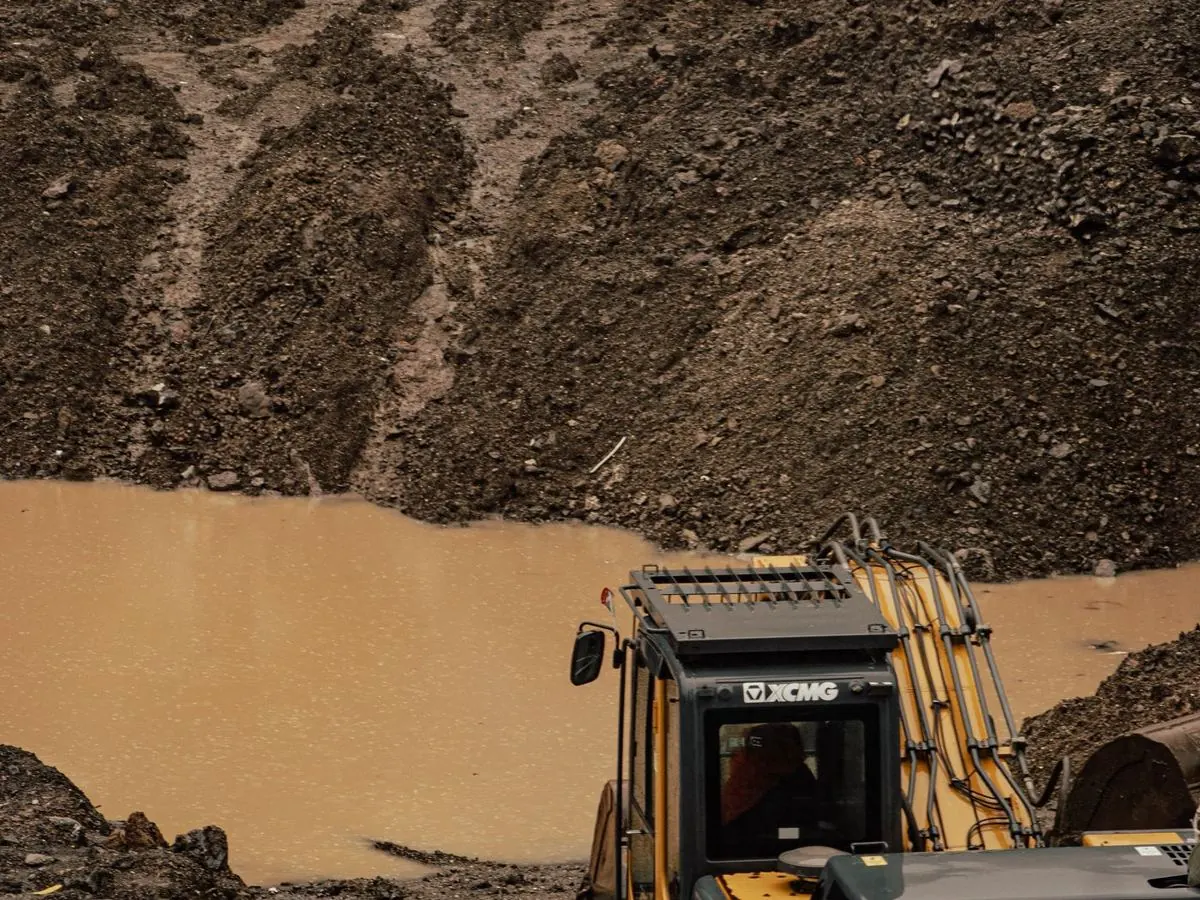
On August 18, 2026 the D.C. Circuit denied all petitions for review in Chamber of Commerce of the U.S. v. EPA, No. 24-1193, leaving in place the Environmental Protection Agency's 2024 rule designating PFOA and PFOS as hazardous substances under CERCLA, the Superfund law, according to Beveridge & Diamond2. EPA had already listed affirming that designation among its actions in a February 2026 summary3.
The designation's direct requirements are reporting and notice obligations, and the rule itself orders no cleanup1. For consultants, owners and lenders, the exposure runs through what a Phase I report says, what a closure certificate covers and whether a land use control was ever recorded. Those documents define when a site is closed and who is exposed. No source retrieved for this article measures how much schedule they cost, and for PFAS the disposal guidance is still interim3.
EPA's final rule, 89 FR 39124, was published May 8, 2024 and took effect July 8, 20241. It sets a default reportable quantity of one pound: a release of that much PFOA or PFOS in 24 hours must be reported to the National Response Center and to state and local emergency bodies, and federal agencies transferring property must give notice and the covenant required by CERCLA section 120(h)1. The preamble says the rule itself requires no response action and that any cleanup depends on site-specific decisions1. It also acknowledges that parties without primary responsibility may still be sued1. EPA's enforcement discretion policy of April 19, 2024 says the agency does not intend to pursue farmers, municipal landfills, water utilities, municipal airports and local fire departments where equitable factors do not support it9.
The court agreed with the rule's framing. Beveridge & Diamond reports that the panel treated CERCLA response actions as discretionary and site-specific and held that the designation does not decide whether cleanup is required or who is liable2. Alston & Bird identifies the opinion as unanimous, written by Judge Millett and joined by Judges Katsas and Rao, and notes that the innocent landowner and third-party defenses remain available13.
Defenses built on paper
Those defenses are built on paper. The All Appropriate Inquiries rule, 40 CFR Part 312, requires the inquiry within one year before acquisition, with interviews, records review, the site inspection, lien searches and the environmental professional's declaration conducted or updated within 180 days5. Section 312.21 requires a written report that identifies data gaps and carries the professional's signed declarations5. Section 312.11 lists ASTM E1527-21 as a standard that may be used, and the allowance for E1527-13 ended February 13, 20245. When EPA recognized E1527-21 in December 2022 (87 FR 76578), it said the standard may contain elements outside the rule's scope, in answer to a commenter who objected to the standard's reference to emerging contaminants6.
Closure, too, is a document. In New York's Brownfield Cleanup Program, investigation and cleanup reports must be certified by a qualified environmental professional or professional engineer, and the Certificate of Completion limits liability to the state for contamination identified by the remedial program11. Texas reports more than 3,300 voluntary cleanup applications and more than 2,800 certificates of completion through August 2024, with a conditional certificate where engineering controls or post-closure institutional controls must continue to perform10.
Program data are thin. The EPA brownfields accomplishments page that could be opened reports cumulative figures only as of October 1, 2019: 30,794 properties assessed and 1,921 cleaned up through the federal program, while the same page, without an as-of date, credits states and tribes with more than 149,692 cleanups since 2006 using Brownfields state program funds12. By those counts most closures run through state programs, where the certificate language matters.
The weak spot: controls after closure
The best-documented evidence on stewardship is old and should be read that way. GAO's January 2005 review found that 69 of 108 remedy decision document sets did not show that the objective, mechanism, timing and responsible party for institutional controls had all been considered7. Of 32 Superfund sites deleted in fiscal years 2001 to 2003 that likely needed controls, only 24 had all of them in place before deletion7. GAO's product page lists its four recommendations as closed and implemented17, and EPA has since issued a 2011 supplement on evaluating institutional controls in five-year reviews and a 2012 guide to implementation and assurance plans78. A later check points to the same weak spot. A March 19, 2025 evaluation by EPA's Office of Inspector General (Report 25-E-0020), covering sites funded under the Infrastructure Investment and Jobs Act, found that the institutional controls information in EPA's Superfund data system was incomplete and not available for oversight, and concluded that a planned system upgrade was unlikely to fix that16.
What is still unsettled
For PFAS, the idea that field methods are settled does not hold. EPA describes its April 2026 destruction and disposal guidance as interim and moved its update cycle from every three years to annual3. The drinking water rule is also unsettled: the 2024 regulation set limits of 4.0 parts per trillion for PFOA and PFOS, and on May 18, 2026 EPA proposed to keep those two limits, let systems request two more years to comply, to 2031, and rescind the limits for PFHxS, PFNA, HFPO-DA and the Hazard Index mixture4. EPA's page for the extension proposal, updated October 8, 2026, says its comment period closed July 20, 2026 and still describes the rule as proposed15.
Interests diverge over who holds the risk. EPA said in April 2025 that it would work with Congress on a liability framework protecting passive receivers3. The 2024 policy describes only how EPA will use its own discretion, and the rule's preamble acknowledges that others may sue19.
A petition for rehearing or certiorari in the Chamber of Commerce case remains possible. EPA has yet to take final action on its two May 18, 2026 drinking water proposals, including the option to extend PFOA and PFOS compliance to 2031, and the next annual update of its interim destruction and disposal guidance, last revised in April 2026, is the nearest thing to a schedule for the technical questions.
Know someone who should read this?
Send it to the consultant handling your permits. Practical pieces like this one travel fastest from one practitioner to another.
Get the next one in your inbox
The Brief on Tuesdays and Field Note on Fridays, with Environment stories first. About five minutes each.
Read a sample issue before you sign up. One click to unsubscribe. Privacy notice. Edited by a team with more than 90 years combined in AEC business development, civil engineering and construction surety.
Updated November 15, 2026. This piece is now credited to the Environment Desk rather than a named desk byline, a short summary was added at the top, and the publication date was corrected to November 14, 2026, the day it first appeared on this site. Standards and corrections.
Sources
- Designation of Perfluorooctanoic Acid (PFOA) and Perfluorooctanesulfonic Acid (PFOS) as CERCLA Hazardous Substances, final rule, 89 FR 39124Federal Register via govinfo (U.S. Environmental Protection Agency) · May 8, 2024 · primary source · read in part
- D.C. Circuit Upholds EPA Rule Designating PFOA and PFOS as CERCLA Hazardous SubstancesBeveridge & Diamond · August 19, 2026 · secondary source
- Key EPA Actions to Address PFASU.S. Environmental Protection Agency · July 1, 2026 · primary source
- Per- and Polyfluoroalkyl Substances (PFAS): National Primary Drinking Water RegulationU.S. Environmental Protection Agency · May 18, 2026 · primary source
- 40 CFR Part 312, Innocent Landowners, Standards for Conducting All Appropriate Inquiries (current as of October 23, 2026)Electronic Code of Federal Regulations · October 23, 2026 · primary source
- Standards and Practices for All Appropriate Inquiries, final rule, 87 FR 76578Federal Register via govinfo (U.S. Environmental Protection Agency) · December 15, 2022 · primary source
- Hazardous Waste Sites: Improved Effectiveness of Controls at Sites Could Better Protect the Public, GAO-05-163U.S. Government Accountability Office · January 28, 2005 · primary source · read in part
- Superfund Institutional Controls: Guidance and PolicyU.S. Environmental Protection Agency · April 24, 2026 · primary source
- PFAS Enforcement Discretion and Settlement Policy Under CERCLAU.S. Environmental Protection Agency · March 19, 2026 · primary source
- Voluntary Cleanup ProgramTexas Commission on Environmental Quality · October 26, 2026 · primary source
- Brownfield Cleanup ProgramNew York State Department of Environmental Conservation · date not shown · primary source
- Brownfields Program Accomplishments and BenefitsU.S. Environmental Protection Agency · date not shown · primary source
- D.C. Circuit Upholds EPA's Designation of PFOA and PFOS as CERCLA Hazardous SubstancesAlston & Bird · August 28, 2026 · secondary source
- Proposed PFOA and PFOS Compliance Extension RuleU.S. Environmental Protection Agency · October 8, 2026 · primary source
- Report: Evaluation of Institutional Control Documentation in the Superfund Enterprise Management System on IIJA-Funded Sites, Report No. 25-E-0020 (summary page)U.S. Environmental Protection Agency, Office of Inspector General · March 19, 2025 · primary source · read in part
- Hazardous Waste Sites: Improved Effectiveness of Controls at Sites Could Better Protect the Public, GAO-05-163 (product page, recommendation status)U.S. Government Accountability Office · January 28, 2005 · primary source
Credited to the Field Letter Press Environment Desk, a desk credit rather than a named reporter. This piece was researched and drafted with AI assistance, and each claim was checked against the sources listed above by a separate reviewer. Field Letter Press did not interview anyone for it. How we work · Report an error