Reality Capture Needs an Owner, Not a Pilot
Camera walks are cheap to try. The deployments on record that lasted have a named lead, a written procedure and a budget line someone agreed to carry.
In brief
Reality capture programs that last have a named lead, a written procedure and a budget line, not just a camera pilot. A 2023 survey of U.S. construction professionals found missing expertise, owner demand and project budget among the top obstacles.
Read transcript
Voice 1: Reality capture. Walking the site with a 360-degree camera, or a scanner. The technology desk says it needs an owner, not a pilot.
Voice 2: Scanning is easy to start and hard to keep paying for.
Voice 1: What do the programs that lasted look like?
Voice 2: One example. A Florida design-build trade contractor lists weekly 360-degree site documentation as one of three mandatory processes on every project, backed by written procedures and training. That is from a vendor case study.
Voice 1: And a British contractor reported in 2024 that it had used automated progress tracking on five projects, covering more than 260,000 square meters.
Voice 2: The common thread is a named lead and a fixed routine.
Voice 1: Now the research on why pilots stall. A peer-reviewed survey of U.S. construction professionals, published in 2023.
Voice 2: Every stakeholder group put the same things among the top obstacles. Missing in-house expertise. Missing owner demand. And no budget at the project level.
Voice 1: The benefits finding is the interesting one. People rated documentation accuracy and speed highest.
Voice 2: And they rated reduced project duration and reduced quality control time lowest. Most groups did not expect it to cut overall cost.
Voice 1: Which leads to the line, a tool whose users do not expect it to cut cost has to be paid for on other grounds.
Voice 2: Also, somebody has to do the walking. One vendor's own page says most customers use their own staff to walk the site with a hard-hat camera. And work that is covered up before the next walk is outside what the camera can report.
Voice 1: A caution on the evidence. A vendor case study is written to sell subscriptions.
Voice 2: And neither of the case studies states what the program costs in licences, cameras or field hours. The contractor accounts describe use, with no cost or schedule result attached.
Voice 1: So the bottom line. The camera walk is cheap to try. What survives is the version with a named lead, a written procedure, and a budget line someone has agreed to carry.
Voice 2: The full piece, with sources, is at fieldletterpress.com.
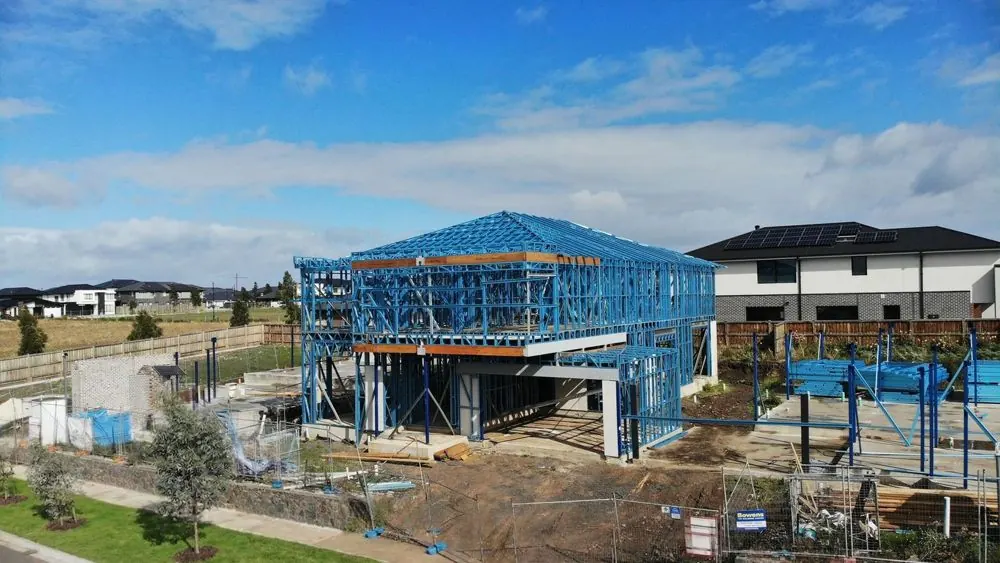
Power Design, a design-build trade contractor in St. Petersburg, Florida, lists weekly 360-degree site documentation as one of three mandatory processes on every project, backed by written procedures and training, according to a case study published by the software vendor OpenSpace1. In Britain, Sir Robert McAlpine reported in August 2024 that it had used Buildots progress tracking on five projects covering more than 260,000 square metres3.
Both accounts have something in common beyond the cameras: a named lead and a fixed routine. A 2023 peer-reviewed survey of U.S. construction professionals placed missing in-house expertise, missing owner demand and missing project-level budget among the top five obstacles to reality capture in every stakeholder group5. The camera walk is cheap to try. What the published record shows surviving is the version that someone owns and someone has agreed to pay for.
Power Design began testing OpenSpace in 2018 at three pilot locations before a company-wide rollout, and the vendor's case study says those first sites had a learning curve for field and IT staff1. The rollout was led by two named people, Director of Field Technology Melvin Gonzalez and IT Field Manager Daves Vargas-Ballestero. The company then wrote standard operating procedures covering how and when to walk a site with a 360-degree camera, ran training, and required a weekly walk on every project1.
The money figures in that case study are thin. OpenSpace reports savings of as much as $15,000 on some individual Power Design projects, with no count of projects and no method, and a 50% cut in cross-country site travel for one West Coast project manager1. Both are vendor-published and neither has been independently checked.
Balfour Beatty's numbers, also from an OpenSpace case study, need the same care. On a job called EPIC 2 run by its Texas Buildings team, before OpenSpace, the team logged 2,135 images in 71.96 hours of capture over five months. On a JP Morgan Chase interior finish-out, with OpenSpace, it logged more than 160,474 images in about 22.29 hours over a five-month span2. Those are two different jobs. The case study gives no size or scope for either, so the comparison is not a controlled before-and-after, and an image count is not a unit of useful output.
Sir Robert McAlpine's account is the contractor's own. In an August 2024 article the firm said it had worked with Buildots for three years, using it to track each subcontractor's progress and to bring measured progress into collaborative planning meetings3. A July 2025 article describes the 105 million pound National Rehabilitation Centre in Nottingham, where Integrated Health Projects, a VINCI Building and Sir Robert McAlpine joint venture, compares 360-degree imagery with the BIM model and schedule and sets weekly activity progress against biometric turnstile headcounts to see where labour is short4.
Why pilots stall
Independent data on adoption is older and narrower. Geo Week News, reporting in July 2022 on a Dodge Data & Analytics survey of civil contractors, engineers and owners, said most reality capture types were used by under half of large contractors, with drones and aerial mapping the exception6. The underlying report, Dodge's Civil Quarterly Issue 4 2021, drew on a survey run in August 2021 of 185 contractors, 44 engineers and 30 owners working on heavy civil projects8.
The survey by Elliott and Olbina, published in the journal Buildings in February 2023, suggests why pilots stall. Respondents across owners, designers, contractors and construction managers rated documentation accuracy and speed as the leading benefits. They rated reduced project duration and reduced QA/QC time lowest, and three of the four groups put reduced overall project cost in their bottom five5. A tool whose users do not expect it to cut cost has to be paid for on other grounds. The same respondents named the absence of a project-level budget and of owner or client demand among the top obstacles5. The data are perceptions from two associations and the authors' LinkedIn contacts, so they describe attitudes and do not measure adoption.
Where the labour sits
Vendor documents show where the labour sits. Doxel's FAQ says most customers use their own staff to walk the site with a hard-hat camera, and that its software identifies work from visible trades7. In most cases someone on the contractor's payroll does the walk, and work that is covered up before the next walk is outside what the camera can report. At Balfour Beatty's Harnett County library job, receptacles and wall devices that clashed with casework still had to be relocated after rough-in. The captured in-wall imagery helped the team find existing pathways, and it did not prevent the clash2.
Nor are the interests aligned. A vendor case study is written to sell subscriptions, and neither OpenSpace study states what the capture program costs in licences, cameras or field hours12. The contractor accounts from Sir Robert McAlpine describe use and decisions, with no cost or schedule result attached34.
Several things are not known: whether Power Design's weekly mandate is still in force and what share of projects comply, since the case study carries no publication date1; what the two Balfour Beatty jobs would show if normalized for floor area; and how often automated progress readings are overturned on review.
Published results would change this picture quickly. Sir Robert McAlpine has not released cost or programme results for the National Rehabilitation Centre in Nottingham, where its joint venture pairs Buildots progress data with turnstile headcounts. Dodge Construction Network has not issued a newer usage survey to replace the 2021 figures that Geo Week News reported in July 2022. Neither OpenSpace nor Power Design has published a dated update showing whether the weekly capture mandate is still in force, or how often it is met.
Know someone who should read this?
Send it to whoever runs VDC or project technology at your firm. Practical pieces like this one travel fastest from one practitioner to another.
Get the next one in your inbox
The Brief on Tuesdays and Field Note on Fridays, with Technology stories first. About five minutes each.
Read a sample issue before you sign up. One click to unsubscribe. Privacy notice. Edited by a team with more than 90 years combined in AEC business development, civil engineering and construction surety.
Updated November 15, 2026. This piece is now credited to the Technology Desk rather than a named desk byline, a short summary was added at the top, and the publication date was corrected to November 14, 2026, the day it first appeared on this site. Standards and corrections.
Sources
- Power Design case studyOpenSpace · date not shown · primary source
- Balfour Beatty case studyOpenSpace · date not shown · primary source
- How AI technology is helping drive project performanceSir Robert McAlpine · August 14, 2024 · primary source
- Buildots AI powers NRC construction with IHPSir Robert McAlpine · July 23, 2025 · primary source
- Benefits and Obstacles to the Adoption of Reality Capture Technologies in the U.S. Commercial and Infrastructure Construction Sectors (Elliott and Olbina, Buildings 13(3), 576)MDPI · February 21, 2023 · primary source · read in part
- The Safety and Productivity Benefits of Reality Capture in ConstructionGeo Week News · July 29, 2022 · secondary source
- Doxel FAQsDoxel · date not shown · primary source
- The Civil Quarterly, Issue 4 2021Dodge Data & Analytics · 2021 · primary source · read in part
Credited to the Field Letter Press Technology Desk, a desk credit rather than a named reporter. This piece was researched and drafted with AI assistance, and each claim was checked against the sources listed above by a separate reviewer. Field Letter Press did not interview anyone for it. How we work · Report an error